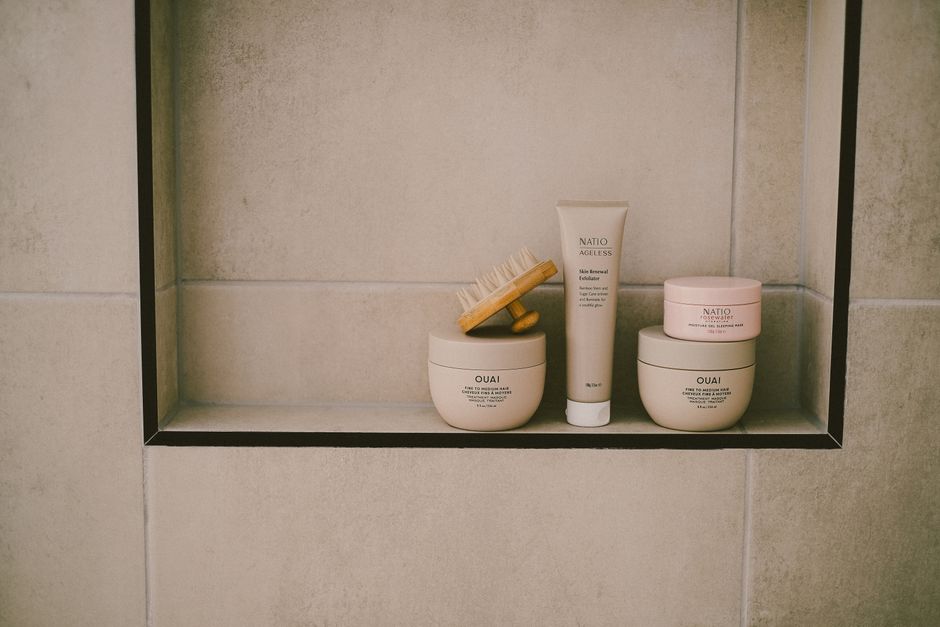
You have 12 products on your bathroom shelf. You’re spending 15 minutes every morning and another 20 at night. And somehow your skin still looks the same as it did when you only used cleanser and moisturizer.
Here’s the truth nobody tells you: most of those steps are doing nothing. Some are even cancelling each other out. You can cut your routine in half and get better results — if you keep the right products and ditch the rest.
The 3 products you absolutely cannot drop
Before we talk about what to cut, let’s nail down the non-negotiables. These three do the heavy lifting. Everything else is optional.
Cleanser
Not the double-cleanse. One proper cleanser. The La Roche-Posay Toleriane Hydrating Gentle Cleanser ($14.99, 400ml) removes sunscreen and light makeup in one pass. If you wear heavy foundation, use an oil cleanser first — the DHC Deep Cleansing Oil ($15.50, 200ml) — then follow with a water-based cleanser. That’s two steps, but only because your makeup demands it. If you don’t wear makeup, one cleanser is enough.
Vitamin C serum (morning)
This is your antioxidant shield. The Timeless 20% Vitamin C + E Ferulic Acid Serum ($24.95, 30ml) is as effective as the $166 SkinCeuticals version at a fraction of the price. It protects against pollution, brightens skin, and boosts sunscreen performance. Skip this and you lose the single most effective daytime preventive step.
SPF 50+ sunscreen
Nothing else matters if you skip this. The Beauty of Joseon Relief Sun SPF50+ PA++++ ($18, 50ml) feels like a moisturizer, leaves zero white cast, and actually protects. Without sunscreen, your retinol is causing damage, your vitamin C is wasted, and you’re paying for anti-aging products that can’t work because UV is destroying collagen faster than you can rebuild it.
Which steps to cut first (and why they’re useless)

Here’s what you should drop immediately. These are the steps that sound good in marketing copy but deliver almost nothing in real life.
| Step to cut | Why it’s overrated | What to do instead |
|---|---|---|
| Toner | Most Western toners are just water with fragrance. Korean toners are essentially hydrating serums — you can get the same effect from a good moisturizer. | Skip it. Your cleanser doesn’t need “balancing.” |
| Essence | A lighter version of your serum. It adds a layer of hydration but does nothing your moisturizer can’t do. | Replace with a single hydrating serum if you need it. |
| Sheet masks | Fun, but temporary. The hydration lasts 2-4 hours. They’re a treat, not a treatment. | Use once a week if you enjoy them. Don’t count them as a routine step. |
| Eye cream | Same ingredients as your face moisturizer, just in a smaller jar. The skin around your eyes isn’t that different. | Apply your regular moisturizer around your eyes. Save $25+. |
| Sleeping mask | An occlusive layer that seals in your moisturizer. Vaseline does the same thing for $4. | Use a thin layer of CeraVe Healing Ointment ($12.99, 113g) if you have dry skin. Otherwise skip. |
The simplified 5-step routine that actually works
This is what you need. No more, no less. Morning and evening combined = 7 products total.
Morning (3 steps):
- Rinse with water (or use cleanser if you have oily skin)
- Vitamin C serum — the Timeless 20% mentioned above
- Moisturizer with SPF — the Beauty of Joseon Relief Sun doubles as both
Evening (4 steps):
- Oil cleanser (if wearing makeup) or water-based cleanser
- Retinol — start with The Ordinary Granactive Retinoid 2% Emulsion ($9.80, 30ml) twice a week, work up to every other night
- Moisturizer — CeraVe Moisturizing Cream ($16.99, 453g) is boring but effective
- Optional: occlusive on dry patches — Aquaphor Healing Ointment ($7.99, 56g)
That’s it. Seven products. Five minutes in the morning, seven at night. Your skin will look better than it did with 12 steps because you’re actually using the active ingredients correctly and not overloading your skin.
The one mistake people make when simplifying
They drop the retinol or the vitamin C. Or they use both at the same time and wonder why their skin is peeling.
Retinol and vitamin C do not go together in the same routine. They have different pH requirements. Using them back-to-back reduces both their effectiveness and increases irritation. Vitamin C in the morning, retinol at night. Never together.
The second mistake: swapping a retinol for a retinol alternative. Bakuchiol is not retinol. It’s gentler, yes, but also significantly less effective for collagen production and cell turnover. If your goal is anti-aging and texture improvement, use actual retinol. Start low — the Neutrogena Rapid Wrinkle Repair Retinol Oil ($22.99, 30ml) is a solid entry point — and build up slowly.
The third mistake: thinking more exfoliation equals better skin. You don’t need a chemical exfoliant every night. Once or twice a week is plenty. Over-exfoliation destroys your moisture barrier, causing breakouts, redness, and sensitivity. If your skin feels tight or looks shiny like plastic, you’ve overdone it. Back off for two weeks. Use only cleanser, moisturizer, and SPF until it recovers.
When to keep the 10-step routine

I’m not saying the 10-step routine is always wrong. There are specific situations where more steps make sense.
You have diagnosed skin conditions. If a dermatologist has prescribed multiple active ingredients for acne, rosacea, or hyperpigmentation, follow their protocol. That’s medical treatment, not skincare fandom.
You live in extreme climates. Dry, cold environments might require a hydrating toner, a serum, and a heavier moisturizer layered together. Desert dwellers and winter-sufferers, you get a pass.
You genuinely enjoy the ritual. If applying seven layers of hydration makes you happy and your skin responds well, keep going. The problem isn’t the routine itself — it’s the belief that more steps automatically mean better results. They don’t.
For everyone else: five steps. Seven products. Fifteen minutes total per day. That’s the routine that gets results without taking over your life.
The skincare industry wants you to believe you need ten products because they want to sell you ten products. The reality is that three active ingredients — vitamin C, retinol, sunscreen — plus a cleanser and moisturizer will outperform a cabinet full of fancy bottles every single time. Spend your money on those five things and your skin will thank you.