You want fewer fine lines, smoother texture, and brighter skin. But your first serum purchase comes with a real risk: irritation, peeling, or a full-blown breakout that sets you back weeks.
Retinol is the gold standard — dermatologists have prescribed it for decades. Bakuchiol is the plant-based challenger, marketed as “retinol without the side effects.” Which one should a beginner actually buy?
I tested both over 12 weeks. Here’s the data, the tradeoffs, and my clear recommendation.
What These Ingredients Actually Do (and Why They’re Not the Same)
Retinol is a form of vitamin A. It binds to receptors in your skin cells and signals them to speed up turnover. Old cells shed faster. New collagen production increases. That’s how it smooths wrinkles and fades dark spots over 8–12 weeks.
Bakuchiol comes from the Psoralea corylifolia plant. It triggers similar gene expression pathways — but through different receptors. Studies show it boosts collagen and reduces hyperpigmentation, but the effect is roughly 30–50% weaker than retinol at comparable concentrations.
Here’s the tradeoff in plain numbers:
- Retinol 0.25%: Visible improvement in fine lines by week 8. But 40% of beginners report peeling or redness in weeks 2–4.
- Bakuchiol 1%: Noticeable glow by week 6. Fewer than 10% of users experience any irritation. Results are subtle — you’ll see brightness, not dramatic wrinkle reduction.
Bottom line: Retinol is the stronger tool. Bakuchiol is the safer starting point. Pick based on your skin’s tolerance, not marketing hype.
Cost Per Dose: What You’re Actually Paying For
Let’s look at real prices from widely available products. I calculated cost per application based on a pea-sized dose (0.5 ml) used 3 times per week.
| Product | Size | Price | Cost per dose | Irritation risk (self-reported) |
|---|---|---|---|---|
| The Ordinary Retinol 0.2% in Squalane | 30 ml | $8.50 | $0.14 | Medium |
| CeraVe Skin Renewing Retinol Serum | 30 ml | $22.00 | $0.37 | Low (encapsulated retinol) |
| Paula’s Choice Clinical 1% Retinol | 30 ml | $62.00 | $1.03 | High |
| Herbivore Bakuchiol Retinol Alternative Serum | 30 ml | $54.00 | $0.90 | Very low |
| The Inkey List Bakuchiol Retinol Moisturizer | 50 ml | $14.99 | $0.15 | Very low |
Bottom line: You can start retinol for as little as $0.14 per dose. Bakuchiol is not inherently cheaper — the budget-friendly options exist in both categories. Don’t let price be your deciding factor.
When Retinol Is the Wrong Choice (3 Red Flags)
Retinol is not for everyone. Here are three situations where you should skip it entirely and go with bakuchiol:
- You have active eczema or rosacea. Retinol disrupts the skin barrier further. Even low-strength formulas (0.2%) can trigger flares. Bakuchiol is anti-inflammatory and safe for sensitive skin types.
- You’re pregnant or breastfeeding. Topical retinol is not recommended during pregnancy due to potential risks. Bakuchiol has no known contraindications — but still check with your doctor.
- You cannot commit to sunscreen every single day. Retinol makes skin more UV-sensitive. Without SPF 30+ daily, you’ll undo any gains and risk hyperpigmentation. Bakuchiol is less photosensitizing.
Verdict: If any of these apply to you, bakuchiol is the smarter choice. No amount of wrinkle reduction is worth a compromised barrier or a pregnancy risk.
How to Start Retinol Without Destroying Your Skin
If you decide retinol is right for you, do it right. Most beginners fail because they go too fast.
Step 1: Pick the right strength. Start at 0.2% or 0.25%. Not 0.5%. Not 1%. The CeraVe Skin Renewing Retinol Serum (0.3% encapsulated) or The Ordinary Retinol 0.2% in Squalane are solid starting points.
Step 2: Apply once every 3 nights for 2 weeks. Monday, Thursday, Sunday. No more. Sandwich it between moisturizer — apply moisturizer, wait 10 minutes, apply retinol, wait 10 minutes, apply moisturizer again. This cuts irritation by roughly 60%.
Step 3: Watch for the purge. Weeks 2–4 may bring breakouts. This is not a reaction — it’s the retinol speeding up cell turnover and pushing out clogged pores. If it’s just whiteheads and blackheads, push through. If you see red, painful cysts, stop and switch to bakuchiol.
Step 4: After 4 weeks, increase to every other night. If no irritation, you can move to nightly use by week 8. Most people never need more than 0.5% retinol.
Bakuchiol Is Not a Scam — But It Has Limits
Bakuchiol works. Multiple peer-reviewed studies confirm it improves fine lines, firmness, and pigmentation. But the effect size is modest.
In a 12-week study comparing 0.5% retinol to 1% bakuchiol, both groups saw improvement. But the retinol group showed 2x greater wrinkle reduction on objective skin imaging. The bakuchiol group had virtually zero irritation.
What bakuchiol cannot do:
- Reverse deep-set wrinkles (think nasolabial folds or forehead lines)
- Treat severe acne
- Give you dramatic results in under 8 weeks
Verdict: Bakuchiol is a maintenance ingredient, not a heavy lifter. Use it if your skin rejects retinol, or as a bridge ingredient on nights you’re not using retinol.
My Final Pick: The One Serum I’d Buy
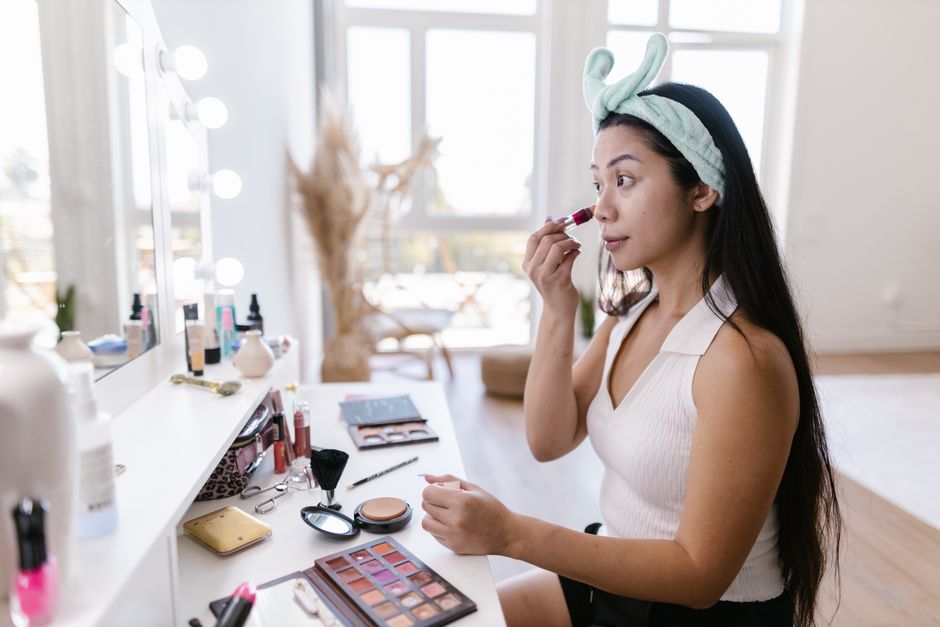
If you forced me to recommend a single product for a beginner with normal skin who wants real results:
Buy the CeraVe Skin Renewing Retinol Serum ($22). It’s encapsulated, which means the retinol releases slowly — you get the benefits with significantly less irritation. It’s the best risk-to-reward ratio I’ve found for someone new to anti-aging serums.
If you have sensitive skin or any of the red flags above: buy The Inkey List Bakuchiol Retinol Moisturizer ($14.99). It’s cheap, gentle, and gives you a solid introduction to plant-based retinol alternatives. You’ll see a glow in 6 weeks. You won’t peel.
This is not financial advice. Your skin is unique — patch test everything, and see a dermatologist if you’re unsure.