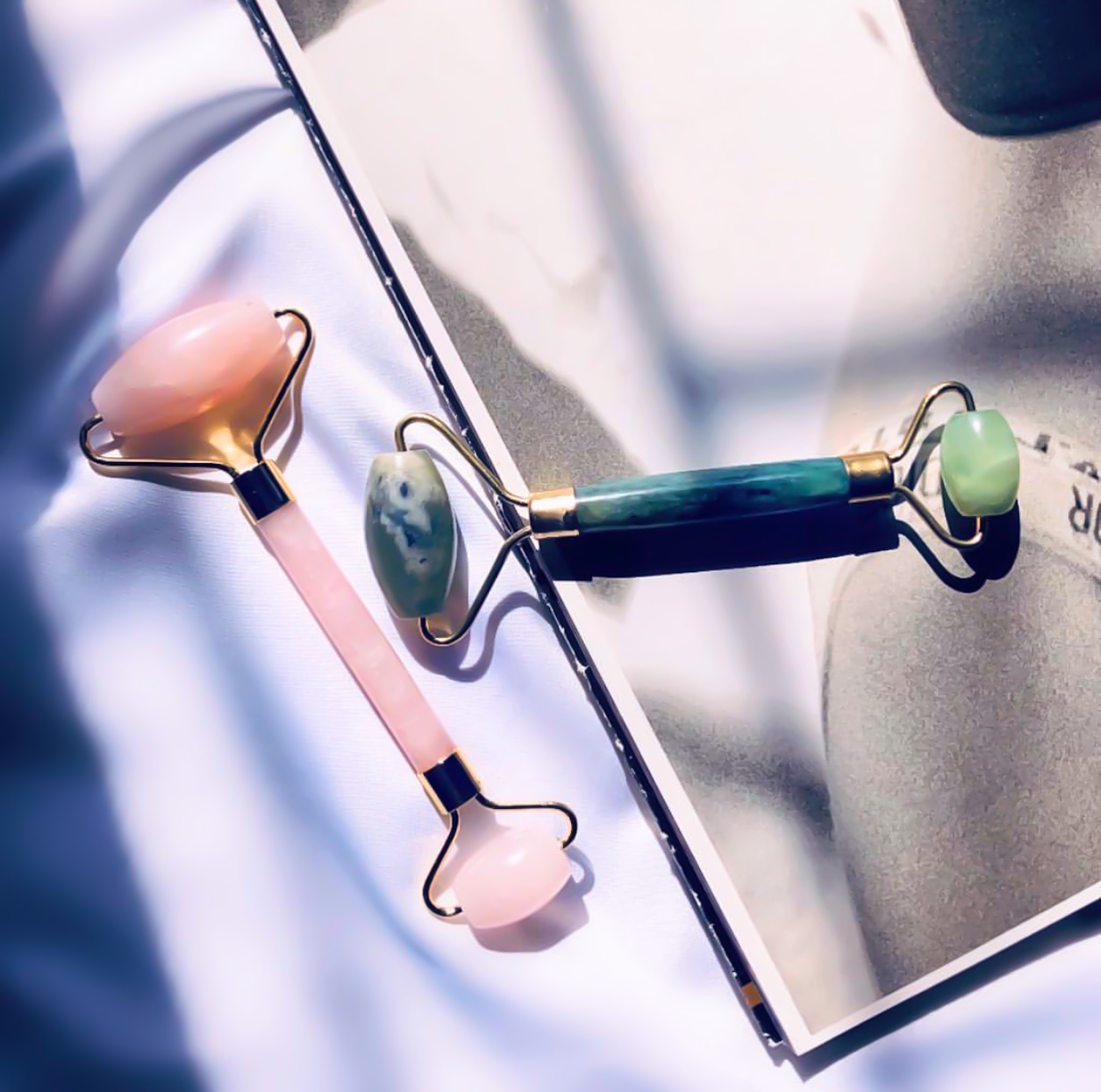
The average face roller has three moving parts. Three. Yet those three parts can produce a squeak loud enough to stop your morning routine cold.
Here’s the reassuring truth: a squeaky roller is almost never broken. It’s almost always a dry, slightly loose, or misaligned axle — and fixing it takes under five minutes with something you already own.
Why Your Face Roller Squeaks: The Root Cause
The squeak comes from one place: the axle. That’s the small metal pin connecting the rolling stone to the handle bracket. When metal moves against metal without lubrication, friction produces sound. Simple physics.
But why does the axle go dry? Three main reasons.
First: low humidity. Airplane cabin air sits at 10–20% relative humidity — comparable to the Sahara. If you travel with your face roller (and many people do — it’s a go-to tool for de-puffing after long-haul flights), that dry air strips residual moisture from the joint over hours. A roller that was silent at home starts squeaking by day two of a trip.
Second: water exposure. Rinsing your roller under running tap water seems like good hygiene, but it forces water into the axle joint. That water causes minor oxidation on steel pins and makes metal expand slightly — enough to create uneven contact and friction at every revolution.
Third: impact. Stone rollers are heavy. When a jade or rose quartz roller shifts around in a carry-on bag without a protective pouch, the weight of the stone twists the handle mechanism over time. The axle shifts slightly out of alignment. A misaligned axle squeaks on every rotation.
The Two Axle Systems — and Why It Matters for the Fix
Most face rollers use one of two mechanisms. The first is a screw-pin system: a small bolt threads through the handle brackets into the roller head, and you can adjust tension with a coin or small screwdriver. The second is a press-fit pin: a smooth metal rod crimped into place with no adjustment possible.
To identify yours: look at the point where the stone meets the handle bracket. A small slotted or Phillips-head indentation means screw-pin. A flat, featureless metal dot means press-fit. This distinction matters because screw-pin rollers can be tuned; press-fit rollers can only be lubricated.
Why Budget Rollers Squeak From Day One
Low-end rollers — the kind selling for $8–12 on Amazon — often squeak immediately because the pin diameter doesn’t precisely match the bracket hole. It’s a manufacturing tolerance issue. The fit is close enough to hold the roller together but not close enough to roll quietly. Oil helps, but it won’t fully compensate for a mechanical mismatch.
Real stone rollers — jade, rose quartz, amethyst — have significant mass. That mass amplifies any looseness in the joint. Ironically, the heavier and more premium-feeling the stone, the faster a poorly fitted axle will squeak. Budget rollers that use acrylic cores painted to look like jade are lighter, which is one reason their squeak is sometimes less severe even with worse manufacturing.
How to Fix a Squeaky Face Roller in 5 Steps
Do these in order. Most rollers are fully fixed by step two.
- Clean the axle area first. Take a dry cotton swab and wipe around the joint on both sides of the handle where the stone meets the bracket. Dried serum, cleanser residue, and skin oil accumulate there and create a gritty layer that produces noise independent of the axle itself. Don’t skip this — lubricating over grime doesn’t work.
- Apply one drop of lubricant to each side of the axle. Work the roller back and forth 15–20 times to distribute the oil into the joint. For the majority of squeaky rollers, this is the complete fix. Done.
- Still squeaking? For screw-pin rollers: loosen by a quarter-turn. Use a small flathead screwdriver or the edge of a coin. Over-tightening is a far more common cause of squeaking than most people realize. The stone can’t spin freely, so every revolution drags the pin against the bracket. Test after each quarter-turn adjustment.
- If loosening didn’t help, tighten by a quarter-turn instead. A roller that’s too loose wobbles laterally, and that wobble creates sideways friction. You want smooth spinning with slight, consistent resistance — not freewheel spinning with play in it.
- For press-fit rollers still squeaking after lubrication: apply oil, then hold the roller vertically with the stone pointing downward, and wait 90 seconds. Gravity helps the oil migrate deeper into the joint. Roll again on your forearm before testing on your face.
If the roller still makes noise after all five steps, stop trying to fix it — see the short section below.
The Safest Lubricants for Your Face Roller
Your roller contacts your face. Whatever you apply to the axle can transfer to your skin — especially near the eye area. Hardware-store lubricants are off the table.
| Lubricant | Skin-Safe? | Effectiveness | Best For | Caution |
|---|---|---|---|---|
| Jojoba oil | Yes | Excellent | All roller types | None |
| Squalane oil | Yes | Excellent | Sensitive skin | Pricier; worth it if already in routine |
| Coconut oil | Conditionally | Good | Non-acne-prone skin | Comedogenic rating of 4 — skip if you break out easily |
| Vitamin E oil | Yes | Good | Rollers used near eyes | Thick — one small drop only |
| WD-40 | No | Short-term only | Do not use | Petroleum distillates — unsafe near skin |
| Petroleum jelly | Conditionally | Moderate | Last resort | Too thick; attracts lint into the joint |
Best pick: jojoba oil. The Leven Rose 100% Pure Jojoba Oil ($14 for 4oz) is non-comedogenic, essentially odorless, and stable across temperatures — it won’t separate or go rancid sitting in a hot hotel bathroom. It also doubles as a lightweight face oil if you’re packing light for a trip.
Squalane is a strong runner-up. Biossance 100% Squalane Oil ($29 for 30ml) maintains viscosity better at cold temperatures than lighter oils — relevant if you refrigerate your roller. If it’s already in your skincare routine, it’s already in your bag.
Skip WD-40 without exception. It’s the first thing people reach for, and it’s wrong every time. The squeak returns within days, and you’ve applied a petroleum product near delicate eye-area skin.
When the Roller Is Beyond Saving
If the axle pin is visibly rusty or corroded, the stone wobbles side-to-side instead of rolling straight, or the squeaking has persisted for months despite lubrication — replace it. A damaged roller applies uneven pressure and can drag on delicate skin. That’s the opposite of what it’s supposed to do, and no amount of jojoba oil fixes a bent pin.
Common Questions About Squeaky Face Rollers
Does a squeaky roller still work for lymphatic drainage?
Mechanically yes, but with reduced effectiveness. Squeaking almost always signals the roller isn’t gliding smoothly — it’s dragging or sticking at some point in each rotation. Lymphatic drainage depends on consistent, unbroken pressure moving in one direction. A sticky or jerky motion disrupts that pattern. Fix the squeak before your next session if lymphatic benefit is the goal.
My roller only squeaks when it’s cold. Is that normal?
Completely normal. Metal contracts slightly at low temperatures, tightening the axle fit and increasing friction. Rollers stored in the fridge — popular for reducing morning puffiness, especially after overnight flights — often squeak for the first 30–60 seconds until the joint warms up. Let yours sit at room temperature for two minutes before rolling. Switching to squalane as your lubricant also helps, since it maintains viscosity better at cold temperatures than thinner oils like argan or rosehip.
Can I use my regular face oil to lubricate the axle?
Yes — with one condition. Single-ingredient or simple-formula face oils work fine. Pure rosehip, pure argan, pure marula: all good. Avoid anything with active ingredients near the metal parts. Vitamin C, AHAs, and retinol can corrode metal pins over time. The oil from a formula like The Ordinary 100% Plant-Derived Squalane ($9) is perfect. A formula like Paula’s Choice C15 Super Booster is not.
My brand-new roller squeaked from day one. Should I return it?
Try the two-minute oil fix first. If the squeak stops, keep it — the roller is mechanically functional. If it doesn’t stop, return it. A roller that squeaks out of the box has an axle that doesn’t fit its bracket correctly. Lubrication can mask the symptom, but the underlying mismatch accelerates wear. You’ll be replacing it within six months anyway.
The Mistake That Makes the Squeak Worse
Tightening the axle is almost always the wrong first move — and it’s almost always what people do first.
The noise sounds like something rattling loose. The instinct is to tighten it. But squeaks come from friction, and friction increases when surfaces are pressed harder together. Over-tightening means the stone can barely rotate, so every revolution drags the pin against the bracket wall instead of rolling freely past it. You’ve made the problem worse and added wear to the mechanism.
Lubricate first. Always. Adjust tension only if lubrication alone doesn’t work after 20 rotations.
The second mistake: too much oil. One drop per side. That’s it. Excess oil doesn’t improve lubrication — it migrates onto your face during use and can cause breakouts along the hairline and temples, exactly where you’re rolling for jawline definition.
Third mistake, and this is a travel-specific one: packing your roller loose in a bag. The Mount Lai Rose Quartz Dual Facial Roller ($35) and the Herbivore Jade Facial Roller ($30) both ship with storage pouches for a reason. Use them. A dense stone roller bouncing against your moisturizer bottle and sunscreen tube over a six-hour flight creates a loose, dry axle — the exact combination that produces the most persistent, hardest-to-fix squeaks. Lost the pouch? Roll the roller in a clean microfiber cloth and secure it with a rubber band. Takes ten seconds.
Face Rollers That Stay Quiet Longer
Better engineering means fewer squeaks. Here’s what separates quiet rollers from noisy ones — and where specific products land:
| Roller | Price | Axle Type | Stone | Squeak Tendency |
|---|---|---|---|---|
| Mount Lai Rose Quartz Dual Facial Roller | $35 | Screw-pin (adjustable) | Genuine rose quartz | Low — self-serviceable tension |
| Herbivore Jade Facial Roller | $30 | Press-fit | Genuine jade | Low-medium; no tension adjustment |
| ESARORA Ice Roller | $16 | Wheel-bearing | Stainless steel head | Quiet at room temp; clicks when cold |
| Shiffa Gemstone Facial Roller | $95 | Precision screw-pin | Genuine gemstone | Very low under normal use |
| Generic Amazon rollers ($8–12) | $8–12 | Press-fit, variable quality | Often acrylic | High — inconsistent manufacturing |
The Mount Lai Rose Quartz Dual Facial Roller is the clear recommendation for most people. The screw-pin design means you can fix a future squeak yourself in 30 seconds with a coin. The stone is genuine — dense enough to apply real, consistent pressure without being so heavy it stresses the joint. The $35 price is the threshold where quality control actually happens in this category.
The ESARORA Ice Roller earns its place at $16 because the wheel-bearing system is mechanically harder to squeak than a standard pin-and-bracket axle. Its limitation is cold-temperature clicking — if you refrigerate your roller, it’ll click for the first minute. At room temperature, it rolls silently. Best budget choice if you skip the fridge storage.
The Shiffa Gemstone Facial Roller at $95 is precision-built and essentially never squeaks under normal use or travel conditions. If you’re already spending on high-end skincare, it’s worth it. But for most people, the law of diminishing returns kicks in hard above $40. The Mount Lai at $35 delivers 90% of the same result.
Avoid generic rollers under $12 for daily use. The axle quality is inconsistent — some units are fine, many aren’t — and there’s no way to know before you open it. A squeak on day one is a sign of a pin that doesn’t fit. No amount of oil fully corrects a mechanical mismatch, and the joint will wear out faster because of it.