Most people who buy this mask expect it to clear up dark circles. It won’t. Dark circles caused by genetics, visible blood vessels near the surface, or years of accumulated sun damage need actual actives — retinol, vitamin C, kojic acid — to make a measurable difference. An overnight hydration mask cannot address those mechanisms.
What this mask does instead is genuinely useful: keeps the skin around your eyes moisturized through the night, reduces inflammation-driven puffiness, and supports long-term firmness through peptides and adenosine. For travelers and desk workers, that’s typically what they actually need — they just don’t identify the problem correctly before buying.
Results vary based on skin type, existing routine, and what’s actually driving the undereye concern. That qualifier runs through this entire review.
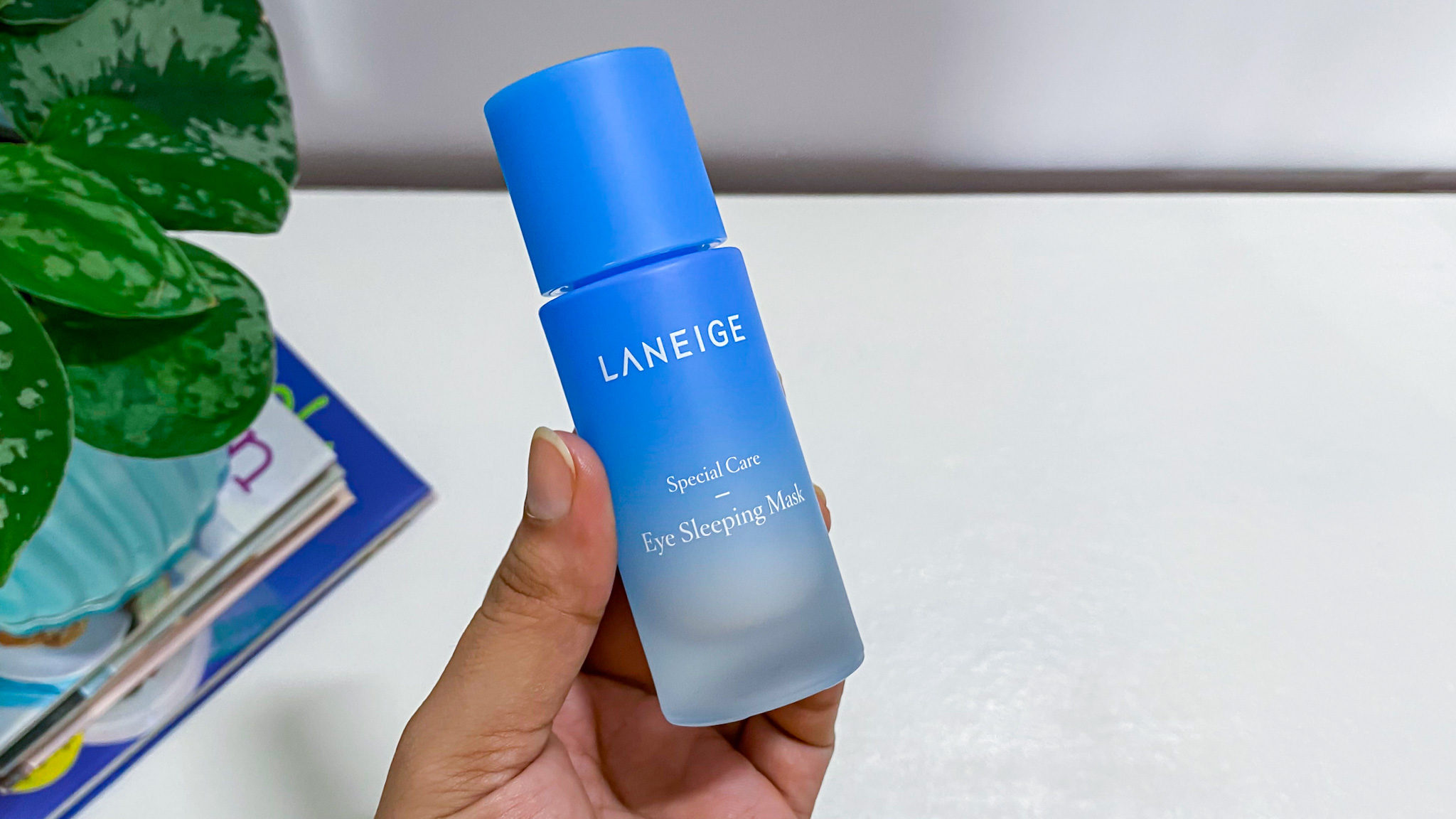
What the Laneige Eye Sleeping Mask Actually Does
The product is a leave-on overnight gel-cream for the skin around and below the eye. Not a rinse-off mask. Not a patch. Not a traditional morning eye cream. The format is designed to absorb in 10–15 minutes and work passively through 6–8 hours of sleep.
Laneige is a Korean beauty brand under Amorepacific, South Korea’s largest cosmetics conglomerate. Its global reputation was built on the Water Sleeping Mask — a face-specific overnight hydration product. The eye version applies the same logic to a harder target: the periorbital area, where skin averages 0.5mm thick compared to 2mm on the cheeks, has far fewer oil glands, and loses moisture faster under environmental stress.
The 25ml jar retails between $25 and $28. At a grain-of-rice-sized application per eye each night, most users get 3–4 months of use per jar.
The Core Ingredients and What Each Does
- Beta-Glucan: A polysaccharide humectant derived from oats and yeast. Draws moisture into the skin. Laneige uses this as the primary hydrating agent because it performs more reliably than hyaluronic acid in low-humidity environments and tolerates better on reactive skin types. Results are visible from the first week.
- Adenosine (0.04%): Korean cosmetic regulations require this minimum concentration before anti-wrinkle claims can legally appear on packaging. The ingredient has published evidence for reducing fine line depth over consistent use. Timeline: 8 to 12 weeks of nightly application.
- Madecassoside: The purified active from Centella Asiatica. Anti-inflammatory, supports microcirculation. This ingredient is responsible for the puffiness reduction — it calms inflamed tissue rather than constricting blood vessels the way caffeine does.
- Palmitoyl Oligopeptide and Oligopeptide-1: Two peptides that signal fibroblast cells to increase collagen synthesis. Gradual results; no visible change before 8 weeks.
- Niacinamide: Brightens overall skin tone around the eye area and strengthens the barrier. Visible at 4–6 weeks of consistent use.
Notably absent from the formula: fragrance, retinol, and essential oils. For contact lens wearers and reactive skin types, that’s a meaningful feature.
How It Differs From a Standard Eye Cream
Standard eye creams work primarily through occlusion — they coat the skin surface and slow moisture from escaping. Laneige calls their approach “Moisture Wrap Technology,” claiming gradual ingredient delivery through the night rather than a single immediate dose.
Independent research specifically on that delivery mechanism is limited. What’s observable in practice: the gel-cream absorbs cleanly without pilling, doesn’t migrate toward the eye during sleep, and leaves no residue that interferes with morning skincare or concealer. For an overnight leave-on product, that practical performance is harder to find than you’d expect at this price point.
How the Price Stacks Up Against Real Alternatives
Price per milliliter is the honest comparison metric when jar sizes vary. Here’s how Laneige compares against four commonly purchased alternatives:
| Product | Size | Price (USD) | Price/ml | Key Actives | Fragrance-Free |
|---|---|---|---|---|---|
| Laneige Eye Sleeping Mask | 25ml | $25–$28 | ~$1.06/ml | Beta-Glucan, Adenosine, Peptides, Madecassoside | Yes |
| CeraVe Eye Repair Cream | 14ml | $14–$17 | ~$1.07/ml | Ceramides, Niacinamide, Hyaluronic Acid | Yes |
| Kiehl’s Creamy Eye Treatment with Avocado | 14ml | $32–$35 | ~$2.36/ml | Avocado Oil, Beta-Carotene | No |
| Origins GinZing Refreshing Eye Cream | 15ml | $30 | $2.00/ml | Caffeine, Panax Ginseng | No |
| Neutrogena Rapid Dark Circle Repair | 14ml | $20–$23 | ~$1.50/ml | Retinol SA, Glucose Complex | No |
Laneige and CeraVe come out nearly identical on price per ml. CeraVe is the better pick if barrier repair is the primary goal or budget is tight — ceramides and niacinamide at $15 is hard to argue with. The texture is heavier and not formulated for overnight leave-on use in the same way, but the ingredient profile is clinically solid.
Kiehl’s Creamy Eye Treatment with Avocado costs more than twice as much per ml. The formula is primarily emollient — it’s a comfort product, not a treatment. Origins GinZing uses caffeine for rapid morning depuffing but contains fragrance and works best as a daytime application, not overnight.
Neutrogena Rapid Dark Circle Repair is the only retinol-based product in this comparison. For pigmentation-driven dark circles, it outperforms the Laneige mask. But it’s not fragrance-free, not suitable for sensitive skin, and requires daytime SPF use during the treatment period.
Four Habits That Make Any Eye Treatment Work Harder
No product performs at its peak in the wrong application conditions. These four habits improve results across any brand — including Laneige — at no additional cost.
- Apply to slightly damp skin. Eye treatments absorb better when the skin still holds some surface moisture. A gentle pat of a damp fingertip around the eye before applying increases how much hydration the skin retains. Small habit, measurable difference.
- Use your ring finger only. It applies the least mechanical pressure of any finger. The skin below your eye is the thinnest on your face — repeated dragging with stronger fingers causes cumulative micro-damage over months and years. This costs nothing to change.
- Store the jar in the fridge. Cool product constricts blood vessels on contact, which visibly reduces puffiness faster than room-temperature application. The Laneige gel-cream is refrigerator-stable. Many travelers use the hotel mini-fridge for exactly this purpose. The difference in morning depuffing speed is noticeable.
- Add a second pillow when sleeping. Flat sleeping allows fluid to pool under the eyes overnight. Slight head elevation reduces that accumulation regardless of which products you’re using. This is the most consistently underused intervention for morning puffiness, and it’s free.
Who Should Buy It and Who Should Save the $25
Clear recommendation for a specific buyer: someone dealing with dehydration-related undereye issues — fine lines that appear when squinting, morning puffiness from poor sleep or travel, general dullness caused by low moisture levels. If those are the concerns, the Laneige Eye Sleeping Mask delivers on them reliably.
The Profile That Gets the Best Results
Frequent travelers whose skin suffers from cabin air and disrupted sleep schedules benefit the most from this product. The 25ml jar falls under carry-on liquid limits. The fragrance-free formula doesn’t interact with other scents in enclosed spaces. The gel absorbs fast enough to apply mid-flight or immediately after landing without needing to wait around.
Dry to normal skin types see the strongest hydration response. Combination skin types benefit as well, particularly in low-humidity seasons. Sensitive skin and rosacea-prone skin tolerate the formula well given the clean formulation — no fragrance, no essential oils, no alcohol.
For fine line improvement specifically, budget at least 8–12 weeks of nightly use before evaluating the outcome. Buyers who judge at two or three weeks consistently report no results, then stop just before the peptides and adenosine produce visible change. That’s a pattern worth noting before purchase.
When to Skip It Entirely
Skip the Laneige Eye Sleeping Mask if your primary concern is dark circles. The formula contains no retinol, no vitamin C, and no kojic acid. For pigmentation-based dark circles, the Neutrogena Rapid Dark Circle Repair Eye Cream is the more appropriate product. For vascular dark circles — the blue-purple kind caused by blood vessels visible through thin skin — retinol (which thickens skin over months of use) is the correct active ingredient.
Also skip it if you’re oily-skinned and prone to milia, those small white keratin cysts that form near the eye. Rich overnight formulas can worsen that condition. The Innisfree Green Tea Eye Cream ($18 for 30ml) is a lighter gel-texture alternative that poses considerably less risk for milia-prone skin.
If budget is the binding constraint: the CeraVe Eye Repair Cream at $15 for 14ml offers ceramides, niacinamide, and hyaluronic acid in a fragrance-free formula. The overnight experience differs, but the active ingredient profile is clinically sound and the price-per-ml is nearly identical to Laneige.
Mistakes That Cut Into Your Results
Using too much product
A grain-of-rice-sized amount per eye is the right dose. The gel-cream expands when warmed briefly between fingertips before patting on. More product doesn’t mean faster results — it increases milia risk and burns through the jar in half the expected time.
Expecting results in the first two weeks
Puffiness reduction shows up in the first week. Fine line improvement and brightening do not. Adenosine and peptides require 8–12 weeks of consistent nightly use. Most buyers who report no results stopped before that window closed. Knowing this going in changes how you evaluate the product.
Skipping earlier hydration steps
This is a treatment layer, not a complete routine. Without a moisturizer or adequate hydration in earlier steps, the active ingredients have less to build on. Apply it after serum and before — or instead of — a separate eye cream, as the last step before sleep. It doesn’t compensate for a missing routine.
Applying it without cleansing first
Leave-on treatments applied over daytime SPF, makeup residue, or pollution don’t penetrate effectively. Clean skin is the baseline. This applies to any overnight product, not just Laneige.
Why Your Eyes Take the Worst Hit When You Travel
What Happens to Skin in Cabin Air
Commercial airplane cabins operate at 8 to 12% relative humidity. Normal healthy indoor air sits at 40 to 60%. That gap causes rapid moisture loss from exposed skin — and the eye area, with fewer oil glands to naturally buffer that loss, is affected before anywhere else on the face. By the second hour of a long-haul flight, the undereye skin is already in a measurable hydration deficit.
Time zone disruption layers on a second stressor. The body regulates fluid retention partly through circadian rhythms. When those rhythms are disrupted by crossing multiple zones, fluid accumulates irregularly — often pooling in the periorbital area and presenting as puffiness that doesn’t respond to sleep the way it normally would.
Alcohol dehydrates skin systemically. Most passengers have at least one drink on a long flight. Salt from airport food causes water retention. That’s four distinct stressors — low humidity, circadian disruption, alcohol, sodium — hitting the most vulnerable area of your face simultaneously, before you even reach the hotel.
When to Apply for Maximum Effect
Apply the Laneige Eye Sleeping Mask the night before a long flight to pre-load hydration before cabin air depletes it. Apply again immediately on hotel arrival — even if it’s midnight local time and you’re applying it over tired, unwashed skin from a layover. The second application matters more than the first in terms of recovery speed.
For trips longer than two weeks, many experienced travelers use the eye mask nightly on the road as the only eye treatment, then rotate back to a vitamin C eye serum at home. That split addresses hydration during travel and pigmentation maintenance at home without needing to carry multiple products.
The jar format works in this context. No tube to squeeze in a cramped airplane bathroom, no pump to operate half-asleep at midnight local time. Open, scoop, pat, done.
The Bottom Line
The Laneige Eye Sleeping Mask delivers on what it actually claims: overnight hydration, reduced morning puffiness, and gradual support for fine lines. It does not reduce dark circles. Know which problem you’re actually solving before you buy.