You show up at Trocadéro at 8 a.m. on a Tuesday. There are already 40 people camped on the steps, tripods locked in, elbows out. You squeeze into a gap, frame your shot, and a guy in a bucket hat walks straight through it. That’s not a photo spot. That’s a war zone.
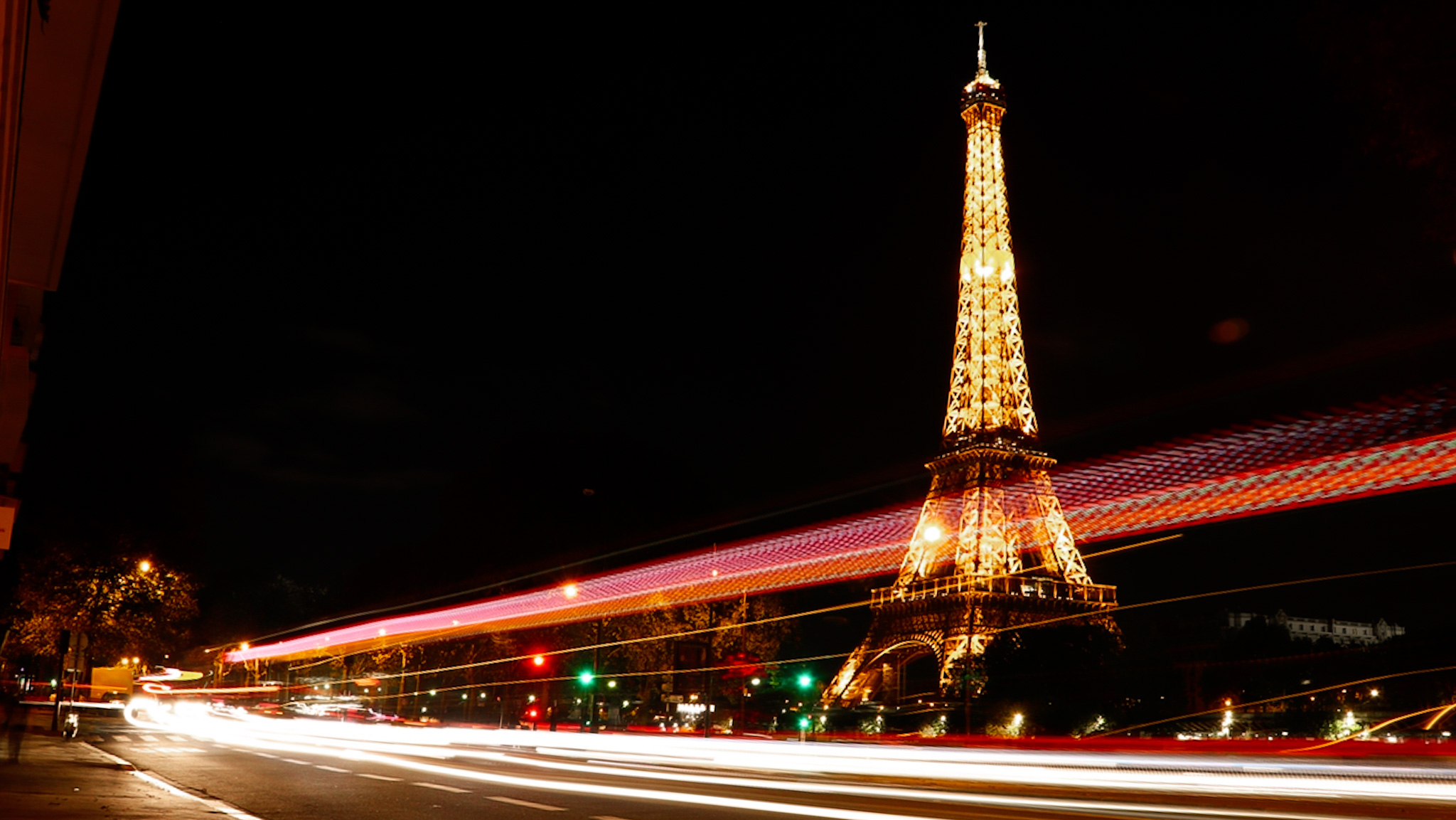
The Eiffel Tower is the most photographed paid monument in the world — roughly 7 million people visit it annually, and most of them take the same 3 shots. The result? 7 million nearly identical photos. The real trick isn’t finding the tower. It’s finding a spot where the tower looks good and you don’t have to fight for it.
I spent 3 days walking every angle within a 2 km radius. I tested 12 locations at sunrise, midday, and golden hour. I tracked crowd density, light direction, and whether the shot actually looked better than what you’d get from a postcard. These 7 spots earned their place.
1. Rue de l’Université — The Classic Frame Without the Crowd
This is the shot you’ve seen on Instagram: the tower rising at the end of a narrow street, framed by Haussmannian buildings. But most people shoot it from Rue de l’Université near the corner of Avenue de La Bourdonnais, which is a mess of parked cars and delivery vans.
The better position: walk to the intersection of Rue de l’Université and Rue de Monttessuy. Stand in the middle of the street (watch for scooters — they come fast). The tower sits dead center, the buildings compress the perspective, and the street lines pull your eye straight up. Come at 7:30 a.m. in April and you’ll have the street to yourself.
What to avoid: shooting between 11 a.m. and 2 p.m. The sun is directly overhead and washes out the ironwork. Also, don’t use a wide-angle lens here — it makes the tower look smaller than it is. A 50mm or 85mm frame compresses the scene and gives you that dramatic, looming effect.
Gear note: I used a Sony A7III with a 55mm f/1.8. The shallow depth of field separates the tower from the background buildings. If you’re on a phone, zoom to 2x or 3x to get the same compression.
2. Pont de Bir-Hakeim — The Inception Bridge
This is the bridge from Inception. The upper deck has a metal colonnade that frames the tower perfectly. But the real spot is the lower pedestrian walkway, accessed from the Quai de Grenelle side. Stand at the midpoint, facing east. The tower sits between the bridge’s central arch.
The trick: shoot through the metal frame of the upper deck. The ironwork creates a natural vignette that draws the eye to the tower. Use a small aperture (f/8 to f/11) to keep both the bridge structure and the tower in focus. Shutter speed: 1/250s minimum — the bridge vibrates with Metro traffic.
When to go: golden hour, 45 minutes before sunset. The light hits the tower from the west and warms the limestone. Crowds are moderate — expect 5–10 other photographers on the lower walkway. Weekdays are noticeably quieter.
Failure mode: don’t stand on the upper deck. The columns block the tower from most angles and the Metro trains ruin every shot with motion blur and noise.
3. Champ de Mars — The Lawn, But Not Where You Think
Everyone goes to the central lawn directly in front of the tower. That’s a mistake. The grass is fenced off most of the year, and the distance flattens the tower into a two-dimensional silhouette. You get a postcard shot, not a photograph.
The real spot: walk to the far western end of Champ de Mars, near the Avenue de Suffren entrance. From here, the tower sits at the end of a long, manicured lawn with hedges on both sides. The perspective lines converge on the tower, and the hedges add foreground depth. Plus, you can sit on the grass legally — the eastern end is the part that’s usually roped off.
Best time: early morning, 6:30–7:30 a.m. The lawn is empty, the light is soft, and the tower catches the first sun. By 9 a.m., the joggers and dog walkers arrive. By 10 a.m., it’s a zoo.
Lens choice: 24–70mm at 35–50mm. Any wider and the hedges dominate. Any tighter and you lose the lawn context. I shot at 40mm, f/5.6, ISO 100. Sharp across the frame.
4. Pont Alexandre III — The Gilded Frame
This is the most ornate bridge in Paris, and from its midpoint, the Eiffel Tower sits perfectly between the golden statues. The problem is that most people shoot from the bridge deck, which puts the tower behind a tangle of lampposts and sculptures.
The solution: go down to the lower quay — Quai d’Orsay. Walk under the bridge and stand at the base of the eastern pillar. Look west. The tower rises above the bridge’s golden winged horses. The contrast between the gilded statues and the dark iron tower is striking.
Settings: f/8 for depth, 1/125s, ISO 200. The bridge provides natural framing, so you don’t need a wide lens. A 70–200mm at 100mm compresses the distance and makes the tower feel closer than it is.
Crowd factor: moderate. The quay is less popular than the bridge deck. Expect 2–3 other photographers during golden hour. No tripod wars.
5. Montparnasse Tower Observation Deck — The Only High-Angle Shot Worth Taking
Here’s the truth: the Eiffel Tower’s own observation deck gives you a view of Paris without the tower in it. That’s useless for photography. Montparnasse Tower, 210 meters tall, is the only elevated spot that puts the Eiffel Tower in your frame at a proper angle.
The cost: €18 for adults. Open daily 9:30 a.m. to 11:30 p.m. (last entry 11 p.m.). The rooftop is outdoors and uncovered — wind is a real issue. Bring a tripod with a hook for ballast.
The shot: from the southeast corner of the deck. The tower sits across the Seine, surrounded by the city. At sunset, the sky turns orange behind it. At night, the tower sparkles on the hour for 5 minutes. Set your shutter to 2–4 seconds, f/11, ISO 100, and use a remote shutter to avoid camera shake.
What nobody tells you: the glass barriers on the lower level reflect light. Go to the upper, open-air deck. The barriers are metal mesh, and you can shoot through the gaps. A lens hood helps block flare from the city lights.
Verdict: worth the €18 exactly once. The view is spectacular, but the wind and crowds make it a one-and-done location. Go on a clear weekday evening.
| Spot | Best Time | Lens (Full Frame) | Crowd Level | Cost |
|---|---|---|---|---|
| Rue de l’Université | 7:30 a.m. – 8:30 a.m. | 50–85mm | Low | Free |
| Pont de Bir-Hakeim | Golden hour (45 min before sunset) | 24–70mm at f/8 | Moderate | Free |
| Champ de Mars (west end) | 6:30 a.m. – 7:30 a.m. | 35–50mm | Low | Free |
| Pont Alexandre III (quay) | Golden hour | 70–200mm at 100mm | Moderate | Free |
| Montparnasse Tower | Sunset + 30 min | 24–70mm, tripod required | High | €18 |
| Passerelle Debilly | Blue hour | 24mm | Low | Free |
| Rue de la Bûcherie | Sunrise | 50mm | Very Low | Free |
6. Passerelle Debilly — The Quiet Bridge Nobody Knows
This pedestrian bridge connects the Musée du Quai Branly to the Palais de Tokyo. It’s 50 meters from the tower, but 95% of tourists walk right past it. The metal deck has a wooden slat surface that reflects warm tones at sunset.
The shot: stand at the center of the bridge, facing east. The tower fills the left third of the frame. The metal structure creates leading lines toward it. Use a 24mm lens to capture the full bridge sweep. At blue hour, the bridge lights come on and the tower glows against a deep blue sky.
Settings: f/8, 1/30s, ISO 400. The bridge is stable, but foot traffic causes vibration. Wait for gaps between pedestrians. A 2-second timer helps.
Why it works: the bridge is low enough that you can shoot upward and get the tower rising dramatically. It’s also one of the few spots where you can include the Seine in the foreground without getting a cruise boat in every frame.
7. Rue de la Bûcherie — The Left Bank Surprise
This narrow street on the Left Bank, between the Seine and the Boulevard Saint-Germain, gives you the tower framed by old Parisian rooftops. It’s not an obvious spot — you have to walk to the intersection with Rue de la Huchette and look northwest.
The angle: the tower appears between two slate-roofed buildings, with a chimney in the foreground. The composition is tight and intimate. It’s the opposite of the wide, grand shots from Trocadéro.
Best light: sunrise. The sun rises behind the tower from this angle, backlighting it. You’ll need to expose for the sky and let the tower go silhouette. Meter at the sky, then underexpose by 1 stop. The result is a dark tower against a pink-orange gradient.
Crowd factor: almost zero. I saw one other photographer in 45 minutes. Locals walk their dogs. That’s it.
Warning: the street is narrow and cars park on both sides. Don’t shoot from the middle of the road. Stand on the sidewalk near the café at 9 Rue de la Bûcherie. The awning provides shade if the sun gets harsh.
The 3 Mistakes That Ruin Eiffel Tower Photos
I made all of these so you don’t have to.
Mistake 1: Shooting at noon. The sun is directly overhead from 11 a.m. to 2 p.m. The tower becomes a flat, gray silhouette. The ironwork loses all texture. If you’re there at midday, shoot details — the lattice patterns, the rivets, the elevators. Don’t try for a full-tower shot.
Mistake 2: Using the wrong lens for the distance. A 16mm wide-angle at Trocadéro makes the tower look like a toy. A 200mm telephoto from Champ de Mars compresses the tower against the buildings behind it in an unnatural way. Match the lens to the spot. The table above gives you the exact focal lengths for each location.
Mistake 3: Ignoring the light direction. The tower is lit by the sun from the west in the morning and from the east in the afternoon. If you shoot from the wrong side, the tower is backlit and you lose all detail. Check the sun position before you go. Photopills or Sun Surveyor are worth the download.
Skip Trocadéro. Skip the central Champ de Mars. The best shots are the ones that require a little walking and a little patience. The tower has been there since 1889. It’ll wait for you to find the right angle.