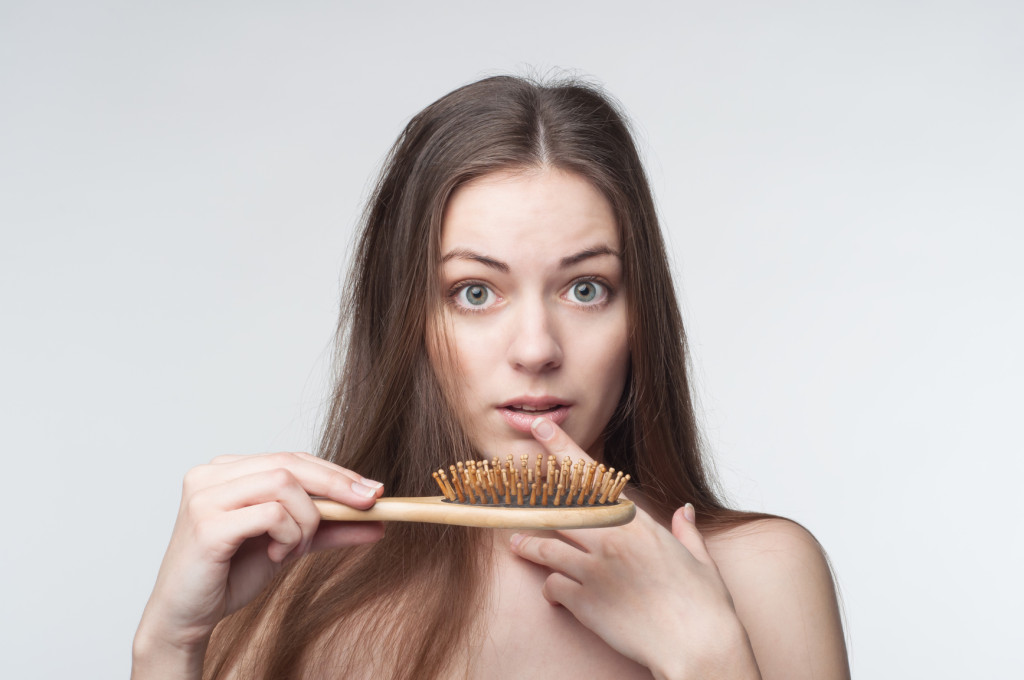
You run your hand through your hair in the shower and pull away a clump. The drain is clogged again. Your hairline has crept back a quarter-inch in the last year, and you’ve tried three different “thickening” shampoos that did nothing. This is not vanity — this is a signal your body is sending. Hair loss affects roughly 50 million men and 30 million women in the United States alone, according to the American Academy of Dermatology. Most of that loss is preventable, but only if you stop chasing product ads and start addressing the actual causes.
Why Hair Falls Out: The Three Mechanisms You Need to Know
Hair loss is not one single condition. It’s a symptom with distinct biological triggers. Understanding which mechanism is driving your shedding is the difference between wasting money on biotin gummies and actually stopping the loss.
The first mechanism is genetic sensitivity to dihydrotestosterone (DHT). This is androgenetic alopecia — male or female pattern baldness. DHT binds to follicle receptors and shrinks them over years. It affects roughly 80% of men by age 70, and about 40% of women by age 50.
The second mechanism is telogen effluvium. This is temporary shedding triggered by a shock to the system: major surgery, rapid weight loss, childbirth, extreme stress, or a high fever. Hair shifts from growth phase to resting phase en masse, then falls out 2-3 months later. It looks dramatic but is usually reversible.
The third mechanism is nutritional or inflammatory disruption. Your hair follicles are among the most metabolically active cells in your body. They require a constant supply of protein, iron, zinc, vitamin D, and B vitamins. When those levels drop, hair production slows or stops. Scalp inflammation from conditions like seborrheic dermatitis can also block growth.
Most people have a combination of these. A 2026 study in the Journal of Clinical and Aesthetic Dermatology found that 42% of patients presenting with hair loss had at least two concurrent causes.
Tip 1: Fix Your Protein and Iron Intake First
You cannot grow hair without building blocks. Hair is almost entirely keratin, a structural protein. If you’re not eating enough protein, your body will prioritize vital organs over hair production. This is basic biology, not an opinion.
The minimum threshold is 0.8 grams of protein per kilogram of body weight per day. For a 150-pound person, that’s 55 grams. For active individuals or those already shedding, 1.2 to 1.6 g/kg is better. That means 80 to 110 grams daily for the same person.
Iron deficiency is equally common, especially in women. A 2026 review in Dermatology and Therapy found that iron deficiency was present in 35% of female hair loss patients. Ferritin levels below 30 ng/mL are strongly associated with shedding. Optimal ferritin for hair growth is 70 ng/mL or higher.
Good sources: lean beef (3 oz = 25g protein, 3mg iron), lentils (1 cup cooked = 18g protein, 6mg iron), eggs (2 large = 12g protein), spinach (1 cup cooked = 5g protein, 6mg iron). Pair iron-rich foods with vitamin C (citrus, bell peppers) to triple absorption.
What not to do: taking iron supplements without a blood test. Excess iron is toxic. Get your ferritin, hemoglobin, and total iron binding capacity tested first. If levels are normal, adding more won’t help and may harm.
Tip 2: Manage DHT Without Drugs — Scalp Care and Topical Strategies
If your hair loss follows a pattern (receding temples, thinning crown, widening part), DHT is likely involved. The pharmaceutical approach is finasteride (oral) or minoxidil (topical). Both work but carry side effects — finasteride can cause sexual dysfunction in roughly 2-5% of men, and minoxidil can cause scalp irritation or unwanted facial hair growth.
Before going that route, try mechanical and topical DHT management. Scalp massage increases blood flow and may mechanically stretch hair follicle cells, stimulating growth. A 2016 Japanese study had men perform 4 minutes of standardized scalp massage daily. After 24 weeks, hair thickness increased significantly compared to the control group.
Pumpkin seed oil is the most evidence-backed natural DHT blocker. A 2014 randomized trial published in Evidence-Based Complementary and Alternative Medicine gave 76 men either 400mg of pumpkin seed oil daily or a placebo. After 24 weeks, the treatment group had 40% more hair growth than placebo. The proposed mechanism: pumpkin seed oil inhibits 5-alpha-reductase, the enzyme that converts testosterone to DHT.
Rosemary oil has direct clinical evidence. A 2015 study compared rosemary oil to 2% minoxidil in 100 men with androgenetic alopecia. After 6 months, both groups showed equal hair counts. The rosemary group had significantly less scalp itching. Dilute 5-10 drops of rosemary essential oil in 1 tablespoon of a carrier oil (jojoba or coconut) and massage into the scalp 3 times per week.
One more thing: wash your pillowcases weekly. Dead skin cells, sebum, and bacteria accumulate on fabric and can clog follicles. Use a gentle, sulfate-free shampoo. Harsh detergents strip the scalp’s protective barrier and increase inflammation.
Tip 3: Stress Reduction Is Not Optional — Cortisol Kills Follicles
This is the tip most people skip because it sounds vague. It is not vague. Cortisol, the primary stress hormone, directly inhibits hair follicle stem cell activity. A 2026 study from Harvard University, published in Nature, demonstrated that elevated corticosterone (the rodent equivalent of cortisol) kept hair follicles in a prolonged resting phase and prevented regeneration. When the stress hormone was removed, follicles reactivated.
This is not a theory. It is a demonstrated biological pathway. Chronic stress does not just “make you worry more about hair loss” — it physically stops hair from growing.
The most effective stress reduction for hair recovery is high-quality sleep. Melatonin, released during deep sleep, is a potent antioxidant for hair follicles. A 2012 study found that topical melatonin application increased hair density in women with androgenetic alopecia. Aim for 7-8 hours per night with consistent bedtimes.
Second: moderate aerobic exercise (30 minutes, 4 times per week) lowers baseline cortisol. Overtraining does the opposite — marathon-level endurance training can spike cortisol and worsen shedding.
Third: limit alcohol. Alcohol raises cortisol acutely and disrupts sleep architecture. One or two drinks per week is fine. Daily drinking is a hair loss accelerant.
Tip 4: Supplement Strategically — Not Everything in a Bottle Works
The supplement aisle is a minefield of overpriced gummies and proprietary blends. Most “hair growth” supplements contain 50 ingredients at doses too low to matter. Here is what the evidence actually supports.
| Supplement | Daily Dose (Evidence-Based) | What It Does | Best Form |
|---|---|---|---|
| Vitamin D | 2,000-5,000 IU | Regulates hair follicle cycling; deficiency linked to alopecia areata | D3 (cholecalciferol) |
| Zinc | 15-30 mg | Supports follicle protein synthesis; deficiency causes brittle, shedding hair | Zinc picolinate (best absorption) |
| Biotin | 2.5-5 mg | Only helps if you are deficient; most people are not | Biotin alone (not in a blend) |
| Iron | As needed (test first) | Essential for oxygen delivery to follicles | Ferrous bisglycinate (gentle on stomach) |
| Saw Palmetto | 320 mg (standardized to 85-95% fatty acids) | Mild DHT blocker; less potent than pumpkin seed oil | Extract, not whole berry powder |
Do not take biotin without a deficiency. It is water-soluble and harmless, but excess is excreted. It also interferes with lab tests — biotin can falsely elevate or depress thyroid and cardiac marker results. If you are taking biotin, stop 3 days before any blood draw.
Do not stack multiple DHT blockers. Combining saw palmetto, pumpkin seed oil, and green tea extract can drop DHT too low, causing libido issues in men. Pick one and use it for 6 months before evaluating.
Tip 5: Change Your Washing and Styling Habits — Mechanical Damage Is Real
Hair that is already thinning breaks more easily. Thin hair shafts have less tensile strength. If you are treating the underlying cause but still yanking hair out with aggressive styling, you are fighting yourself.
Wash frequency: wash your hair when it is oily, typically every 1-3 days. Letting oil build up does not “protect” hair — it traps DHT and debris against the scalp. Use lukewarm water. Hot water strips natural oils and weakens the hair cuticle.
Drying: never rub wet hair with a towel. Wet hair is at its weakest — the hydrogen bonds in keratin are broken by water. Rubbing causes breakage. Instead, blot gently with a microfiber towel or an old cotton t-shirt, which creates less friction.
Brushing: use a wide-tooth comb on wet hair, never a brush. Start at the ends and work up to detangle without snapping strands. Brush dry hair with a boar bristle brush, which distributes sebum evenly and reduces static. Avoid plastic bristles — they create micro-tears in the cuticle.
Heat styling: keep heat below 300°F. Use a heat protectant spray on every use. Limit blow drying, flat ironing, and curling to 3 times per week max. The keratin protein in hair denatures at around 350°F. Once denatured, it cannot be repaired — you have to grow it out.
Tight hairstyles: ponytails, buns, braids, and cornrows that pull on the hairline cause traction alopecia. This is fully preventable. If your scalp aches when you take your hair down, the style is too tight. Alternate loose and tight styles. Give your hairline a break at night with a loose braid or silk scrunchie.
Tip 6: Rule Out Thyroid Disease and Autoimmune Conditions
Hair loss can be the first sign of a systemic illness. If you have tried diet changes, stress reduction, and scalp care for 6 months with no improvement, it is time for blood work. Do not guess.
Thyroid disorders — both hypothyroidism and hyperthyroidism — cause diffuse thinning across the entire scalp, not just the crown or temples. A 2018 study in the International Journal of Trichology found that 30% of patients with chronic telogen effluvium had undiagnosed thyroid dysfunction. The standard test is TSH (thyroid stimulating hormone), free T4, and free T3. Optimal TSH for hair growth is between 0.5 and 2.5 mIU/L. Levels above 2.5 may still be “normal” by lab ranges but can cause shedding.
Iron deficiency without anemia is another hidden cause. Your hemoglobin can be normal while your ferritin (iron storage) is critically low. Ferritin under 30 ng/mL is associated with hair loss. Ferritin under 15 ng/mL is severe deficiency. Ferritin over 70 ng/mL is considered optimal for hair growth.
Vitamin D deficiency is epidemic — roughly 40% of the US population has levels under 20 ng/mL. A 2026 meta-analysis in Dermatology Practical & Conceptual found that vitamin D levels were significantly lower in people with alopecia areata and female pattern hair loss. Target 50-80 ng/mL. Supplement 2,000-5,000 IU daily if levels are low.
Autoimmune conditions like alopecia areata cause patchy, coin-sized hair loss. This is an immune system attack on follicles. It requires a dermatologist’s diagnosis and often prescription treatments (corticosteroids, JAK inhibitors). Natural methods alone will not stop autoimmune hair loss.
Your primary care doctor can order these labs: CBC, ferritin, TSH, free T4, vitamin D, zinc, and B12. Cost varies but is typically covered by insurance if you report hair loss as a symptom.
Tip 7: When Natural Methods Are Not Enough — The Honest Threshold
Natural approaches work best for telogen effluvium, nutritional deficiencies, and mild androgenetic alopecia caught early. They work poorly for advanced pattern baldness, scarring alopecias, and genetic loss that has been progressing for more than 3 years.
The evidence is clear: if you have lost more than 50% of your hair density on the crown or frontal region, diet and scalp massage alone will not regrow it. Follicles that have been miniaturized for years may be dormant or dead. Natural methods can slow further loss but cannot resurrect dead follicles.
At this point, the medically proven options are:
- Minoxidil (Rogaine) — 5% topical foam or liquid, applied twice daily. Works in 40% of men and 60% of women. Results visible at 6 months. Must be used indefinitely — stopping causes loss of gained hair within 3-4 months.
- Finasteride (Propecia) — 1mg oral daily. Blocks DHT production. Effective in 80% of men. Side effects (sexual dysfunction, depression) in roughly 2-5% of users. Not approved for women of childbearing age.
- Low-level laser therapy (LLLT) — FDA-cleared devices (HairMax, iRestore) that deliver red light to follicles. A 2014 meta-analysis found 35% increase in hair density after 6 months. Expensive ($400-$800) but side-effect-free.
- Platelet-rich plasma (PRP) injections — Your own blood is spun to concentrate platelets, then injected into the scalp. Costs $500-$1,500 per session. 3-4 sessions needed. Results vary widely by practitioner skill.
Combining natural methods with one medical treatment often yields better results than either alone. For example, using minoxidil plus daily scalp massage plus pumpkin seed oil addresses three different mechanisms simultaneously.
The single most important takeaway: hair loss is a medical symptom, not a cosmetic inconvenience. If you treat it like a styling problem, you will waste years and money. If you treat it like a biological signal — and investigate the cause with blood work and a dermatologist — you have a real chance of stopping it.