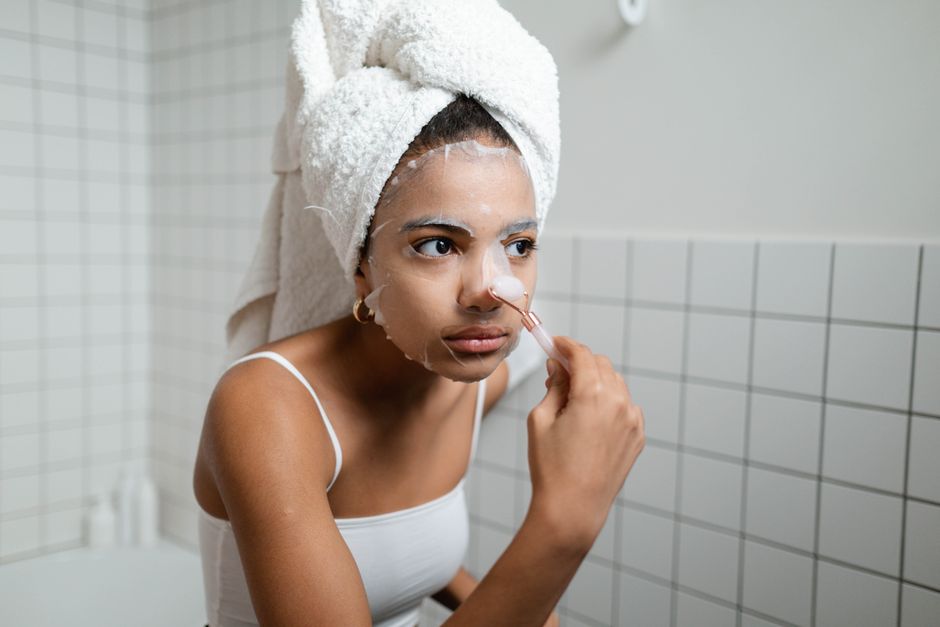
You wash your face. You apply moisturizer. Your skin turns beet red and burns for an hour. That’s not a routine — that’s a lottery where every product is a potential trigger. Rosacea-prone skin reacts to things normal skin barely notices: fragrance, essential oils, even water temperature. The wrong ingredient makes flushing worse. The right one calms it down. Here’s what actually works, what doesn’t, and how to build a routine that stops the guessing.
What Makes an Ingredient “Calming” for Rosacea?
Most people think “calming” means something that feels cool or tingly on the skin. For rosacea, it’s the opposite. Tingling = irritation. Calming means the ingredient actively blocks the inflammatory cascade — the chain reaction that causes blood vessels to dilate and skin to flush.
The science is straightforward. Rosacea involves an overactive immune response to triggers like UV light, heat, or certain bacteria. Calming ingredients work by one of three mechanisms:
- Reducing vascular reactivity — they stop blood vessels from dilating so easily
- Strengthening the skin barrier — a damaged barrier lets irritants in faster
- Lowering inflammation at the cellular level — they block cytokines that signal redness
If an ingredient doesn’t do at least one of these three things, it’s just marketing. Here are the five that pass the test.
Azelaic Acid
This is the gold standard for rosacea. Dermatologists prescribe it at 15-20% concentrations. It reduces inflammation AND kills the Demodex mites that some research links to rosacea flares. The Ordinary Azelaic Acid Suspension 10% costs around $8 and works well for mild cases. For prescription strength, ask your doctor about Finacea 15% gel.
Niacinamide
Vitamin B3 strengthens the skin barrier and reduces redness by blocking inflammatory messengers. Studies show 4% niacinamide reduces rosacea symptoms after 8 weeks. The Inkey List Niacinamide 10% ($10) is a solid option, but start with a lower percentage if your skin is very reactive.
Centella Asiatica (Cica)
This plant extract contains madecassoside, which speeds wound healing and reduces redness. It’s gentle enough for active flares. La Roche-Posay Cicaplast Baume B5 ($16) combines centella with panthenol and shea butter — it’s a thick balm that forms a protective layer over irritated skin.
Ceramides
Ceramides are lipids that fill the gaps between skin cells. Rosacea-prone skin has lower ceramide levels, which means irritants penetrate deeper. CeraVe Moisturizing Cream ($16 for 16oz) contains three types of ceramides and costs pennies per use. No fragrance, no essential oils.
Green Tea Extract
EGCG, the main antioxidant in green tea, reduces UV-induced redness and suppresses inflammatory cytokines. Isntree Green Tea Fresh Toner ($18) uses 75% green tea water and feels light on the skin. Apply it after cleansing for a soothing boost.
The 4-Step Rosacea Routine That Works
Most rosacea routines fail because people use too many products. Your skin needs fewer steps, not more. Here’s the exact routine I recommend to friends who ask:
| Step | Product Type | Key Ingredient | Example Product | Price |
|---|---|---|---|---|
| 1 | Gentle cleanser | No sulfates, no fragrance | Vanicream Gentle Facial Cleanser | $9 |
| 2 | Treatment serum | Azelaic acid or niacinamide | The Ordinary Azelaic Acid 10% | $8 |
| 3 | Moisturizer | Ceramides | CeraVe Moisturizing Cream | $16 |
| 4 | Sun protection | Zinc oxide or titanium dioxide | EltaMD UV Clear SPF 46 | $39 |
Apply the cleanser with lukewarm water — hot water triggers flushing. Pat dry with a soft towel, don’t rub. Wait 30 seconds between steps so each product absorbs. Sunscreen is non-negotiable; UV light is the #1 trigger for rosacea flares.
Avoid exfoliating acids (glycolic, lactic, salicylic) during active flares. They strip the barrier and make redness worse. If you need exfoliation, use a soft washcloth once a week instead.
Three Common Mistakes That Make Rosacea Worse
I’ve made all three. Here’s what to avoid.
Mistake 1: Using Essential Oils
Lavender, tea tree, peppermint, eucalyptus — these are marketed as “natural” but they’re potent irritants for rosacea-prone skin. A 2018 study found that lavender oil caused vasodilation in 78% of rosacea patients. Avoid any product that lists “fragrance” or “parfum” in the first five ingredients.
Mistake 2: Over-Cleansing
Washing your face twice a day with a foaming cleanser strips the barrier. Rosacea skin produces less oil, so you don’t need that much cleaning. Wash once at night with a gentle cleanser. In the morning, just rinse with water or use a micellar water.
Mistake 3: Skipping Sunscreen
UV light triggers mast cells in the skin to release histamine, which causes flushing. Mineral sunscreens with zinc oxide or titanium dioxide are better than chemical sunscreens because they sit on top of the skin and reflect light rather than absorbing it. Chemical sunscreens like avobenzone can cause stinging on sensitive skin.
When to Skip the DIY Routine and See a Dermatologist
Over-the-counter products work for mild rosacea — occasional flushing, mild redness, a few papules. But if you have persistent redness that doesn’t fade, visible blood vessels, or pustules that look like acne, you need prescription treatment.
Dermatologists can prescribe:
- Ivermectin cream (Soolantra) — kills Demodex mites, reduces papules and pustules
- Brimonidine gel (Mirvaso) — constricts blood vessels to reduce redness for up to 12 hours
- Oral doxycycline — low-dose antibiotics that reduce inflammation without killing bacteria
- Laser therapy — targets visible blood vessels with intense pulsed light (IPL) or pulsed dye laser
Don’t wait until your skin is constantly red. Early treatment prevents the condition from progressing. If your current routine isn’t improving things after 6 weeks of consistent use, make an appointment.
What to Do During a Rosacea Flare
A flare happens. You eat spicy food, drink wine, or stand in a hot shower. Your face turns bright red and burns. Here’s how to calm it down fast.
Step 1: Stop everything. Don’t apply any active ingredients. No acids, no retinoids, no vitamin C. Stick to just cleanser, moisturizer, and sunscreen until the redness subsides.
Step 2: Cool compress. Soak a clean washcloth in cool water (not ice cold — that can shock the blood vessels). Apply for 5 minutes. Repeat if needed.
Step 3: Apply a barrier cream. La Roche-Posay Cicaplast Baume B5 or Avene Cicalfate+ Restorative Protective Cream ($28) both contain zinc and copper to calm inflammation and protect the skin while it heals.
Step 4: Skip makeup for 24 hours. Foundation and concealer trap heat against the skin and make flushing worse. If you must cover redness, use a green-tinted primer under a mineral powder foundation.
The worst thing you can do during a flare is try to “fix” it with more products. Less is always more for rosacea.
Azelaic acid and a gentle routine with ceramides will do more for your rosacea than any ten-step Korean skincare regimen ever will.